

How to Buy Bluetooth Speakers in Bulk in 2026?
Buying Bluetooth Speakers In Bulk in 2026 requires more than comparing unit prices. A low quote can hide weak batteries, unstable Bluetooth connections, or expensive warranty claims. Experienced buyers inspect the full supply chain before approving a purchase. They review the factory’s production history, sample quality, communication speed, and after-sales process. A reliable supplier should provide clear specifications, testing records, and realistic delivery dates. Ask about Bluetooth version, playtime, charging ports, waterproof ratings, microphone quality, and packaging dimensions. Small details matter. A speaker that looks attractive online may feel cheap in a customer’s hand.
Request samples from several suppliers before discussing a large order. Test them in a busy room, outdoors, and near multiple wireless devices. Measure actual battery performance rather than trusting marketing claims. Check button durability, charging behavior, sound distortion, and printed logos. Independent inspection can identify defects before shipment. Confirm applicable product safety, radio, battery, labeling, and recycling requirements for each destination market. Requirements can vary by country and product configuration, so professional compliance advice may be worthwhile. Never assume one certificate covers every region.
Budget for freight, customs charges, spare units, inspection fees, and returns. These costs are easy to underestimate. Compare landed cost, not factory price alone. Negotiate practical terms, including sample approval, defect limits, replacement procedures, and payment milestones. A written agreement protects both sides. Still, mistakes happen. Even careful testing cannot predict every customer complaint. Leave room for improvement after the first shipment, and record real feedback from retailers and users. The strongest buying decision balances price, performance, compliance, and long-term supplier reliability.
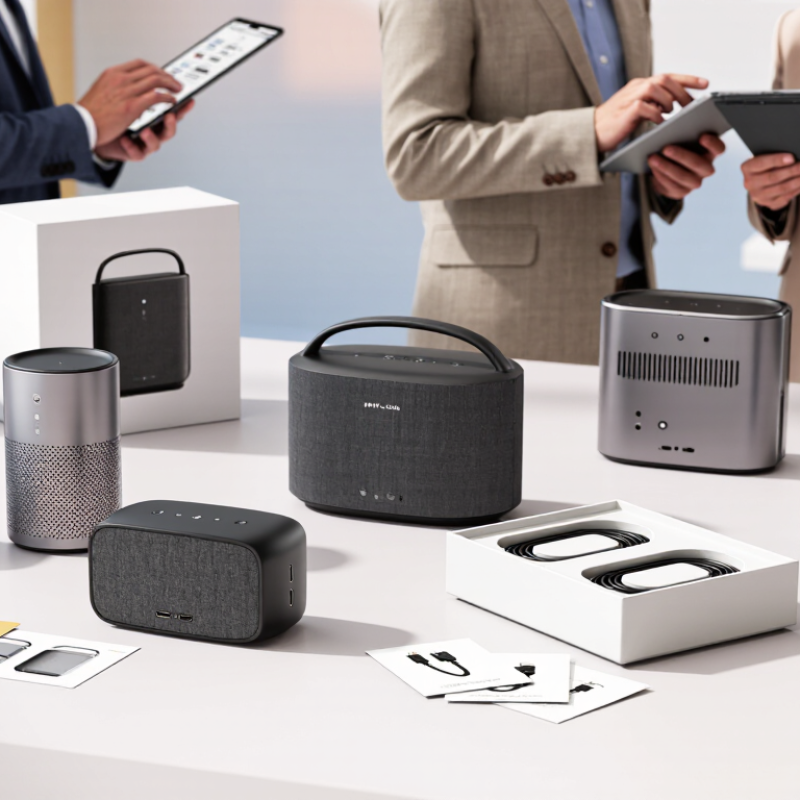
Define Demand with Bluetooth SIG’s 7.1B-Device 2028 Shipment Forecast
Bluetooth SIG forecasts 7.1 billion Bluetooth devices will ship in 2028. That number signals a large market, not guaranteed sales for every buyer. Bulk purchasing should begin with a clear demand estimate. Review past orders, customer profiles, seasonal events, and expected replacement cycles. Then separate confirmed demand from optimistic guesses.
A practical order plan may include compact speakers for offices, outdoor gatherings, hotels, and gift programs. Check battery capacity, charging time, wireless range, microphone quality, and water resistance claims. Request samples before placing a large order. Test pairing across several phones and laptops. Inspect ten or more units, not just one. Small defects become expensive at scale.
Leave room for uncertainty. Forecasts describe market direction, while your customers decide actual turnover. A first purchase can be smaller, with agreed pricing for later replenishment. Ask suppliers for test reports, packaging details, warranty terms, and production timelines. Verify every specification independently. Do not assume a lower price means better value. It may only reflect weaker materials or limited support. Mistakes happen. A written inspection checklist can reduce them.
| Buying Dimension | Relevant Data Point | 2026 Bulk-Buying Interpretation | Recommended Procurement Requirement | How to Verify Before Purchase |
|---|---|---|---|---|
| Market demand | 7.1 billion Bluetooth device shipments are forecast for 2028. | Bluetooth hardware is moving toward a very large shipment ecosystem, but demand should still be segmented by use case rather than estimated from total market volume alone. | Define the buyer profile, sales channel, expected monthly sell-through, and replacement rate before setting the order quantity. | Build a demand model using historical sales, pre-orders, channel commitments, and a conservative replenishment cycle. |
| Bluetooth version | Bluetooth Core Specification milestones include Version 5.0 in 2016, Version 5.2 in 2020, Version 5.3 in 2021, and Version 5.4 in 2023. | A newer Core Specification number does not automatically guarantee better speaker sound, range, battery life, or compatibility. | Specify the exact supported features, connection behavior, codec support, and operating-system compatibility instead of approving a version number alone. | Request the product specification, Bluetooth qualification information, firmware version, and a live pairing test with target devices. |
| Audio performance | Rated output power, frequency response, distortion, sensitivity, enclosure design, and DSP settings all affect perceived sound quality; wattage alone is not a complete performance measure. | Two speakers with the same advertised wattage can produce different loudness, bass response, and distortion levels. | Set a listening target by environment: desk, bedroom, outdoor area, retail display, or event space. | Use identical music tracks and test volume, bass, vocal clarity, maximum-output distortion, and performance after 30 minutes of operation. |
| Wireless range | Actual range depends on transmit power, antenna design, obstacles, radio interference, and the connected device. | A quoted open-area range should not be treated as the expected indoor range. | Define the minimum usable distance for the intended environment and require stable audio without repeated dropouts. | Test line-of-sight and indoor range through walls, with multiple source devices and normal Wi-Fi activity nearby. |
| Battery capacity | Battery energy can be estimated with the formula Wh = nominal voltage × ampere-hours. Playback time also depends on volume, amplifier efficiency, radio activity, and battery age. | A larger mAh number is not directly comparable when nominal battery voltages differ. | Specify minimum continuous playback time at a defined volume level, charging time, standby time, and battery replacement policy. | Request a standardized runtime test report and conduct a sample test at the agreed volume and connection conditions. |
| Charging interface | USB Type-C describes the connector format; it does not by itself confirm a particular charging power, USB Power Delivery capability, data function, or cable standard. | Connector appearance alone is insufficient for charger and cable planning. | Specify input voltage, maximum charging current, charging protocol, included cable, over-charge protection, and indicator behavior. | Test with the intended chargers and cables, and inspect charging protection and thermal behavior during a full charge. |
| Ingress protection | Under IEC 60529, an IP67 enclosure is dust-tight and protected against temporary immersion in water up to 1 metre for up to 30 minutes, subject to the applicable test conditions. | An IP rating applies to specified test conditions and does not mean the product is suitable for every water or impact scenario. | Match the rating to the use environment and clarify whether port covers must be closed for the protection claim to apply. | Review the test report, inspect seals and covers, and confirm warranty treatment for water-related failures. |
| Multi-speaker operation | Stereo pairing, party mode, and broadcast-style audio are different functions and may require specific firmware, compatible devices, or supported Bluetooth features. | Do not assume that two identical speakers can automatically synchronize or form a left-right stereo pair. | Define the maximum number of linked units, stereo-pair behavior, latency tolerance, reconnection behavior, and source-device limits. | Test pairing, power cycling, distance between units, reconnection, volume synchronization, and audio delay. |
| Compliance and shipment | Lithium-ion batteries intended for transport are subject to applicable dangerous-goods rules, and UN 38.3 testing is part of the battery transport qualification framework. | Battery documentation can affect air freight, customs clearance, warehouse handling, and delivery schedules. | Require the applicable UN 38.3 test summary, battery specification, safety data, packaging details, and destination-market compliance documents. | Have the freight forwarder and import adviser review the documents before production and before booking shipment. |
| Quality control | Bluetooth pairing, audio output, battery charging, buttons, seals, and cosmetic finish are separate inspection points. | A single functional test cannot reliably identify battery, acoustic, cosmetic, or packaging defects. | Use a written inspection plan with sample size, acceptable quality limits, defect classification, and pre-shipment approval rules. | Perform pre-production approval, first-article inspection, in-process checks, and pre-shipment sampling against signed specifications. |
| Order quantity planning | A practical replenishment model is: Order quantity = forecast demand during lead time + safety stock − available inventory − confirmed inbound stock. | Large market forecasts do not replace SKU-level demand planning. | Separate launch inventory, safety stock, seasonal demand, warranty replacements, and promotional units. | Review the calculation monthly and adjust it using actual sell-through, defect rates, lead time, and channel inventory. |
Related Posts
-
Buy Bluetooth Speakers In Bulk for Your Business Needs?
-
Top Bluetooth Speakers In Bulk For Your Next Big Event?
-

2026 Best Custom Printed Safety Vests for Global Buyers?
-

Top 10 Logo Drawstring Bags China for Your Promotional Needs?
-

Top Eco Friendly Shopping Bags for Sustainable Living Choices?
-

How to Choose the Best Eco Friendly Shopping Bags for Your Needs?