
Buying custom logo drawstring bags from China in 2026 requires more than finding the lowest online quotation. Importers must compare factories, materials, printing methods, production capacity, quality controls, and delivery terms. A polished product photo proves very little.
“Your sample should answer questions before your deposit creates new ones,” says Lina Chen, a China packaging procurement consultant with more than twelve years of factory-sourcing experience. Her advice reflects a practical truth in the Logo Drawstring Bags China market. Request a physical sample before confirming bulk production. Check the fabric weight, cord strength, stitching, logo alignment, and color consistency under natural light. Small defects become expensive when multiplied across 10,000 bags.
A reliable supplier should provide clear specifications, realistic lead times, and verifiable business information. Ask whether the bags use cotton, recycled polyester, non-woven fabric, or another material. Confirm the logo process, including screen printing, heat transfer, embroidery, or sublimation. Each method affects appearance, durability, and cost.
Do not ignore packaging details. A crushed carton can damage finished bags before they reach your warehouse. Discuss carton dimensions, inner packing, labeling, and inspection procedures early. Independent quality inspection may add expense, but it can reduce unpleasant surprises.
The cheapest offer is not always the strongest choice. That sounds obvious. It is not. Exchange rates, sampling fees, tooling, freight, and customs-related costs can change the final budget. A careful buying plan leaves room for revisions, because even experienced importers sometimes discover that their first design needs improvement.
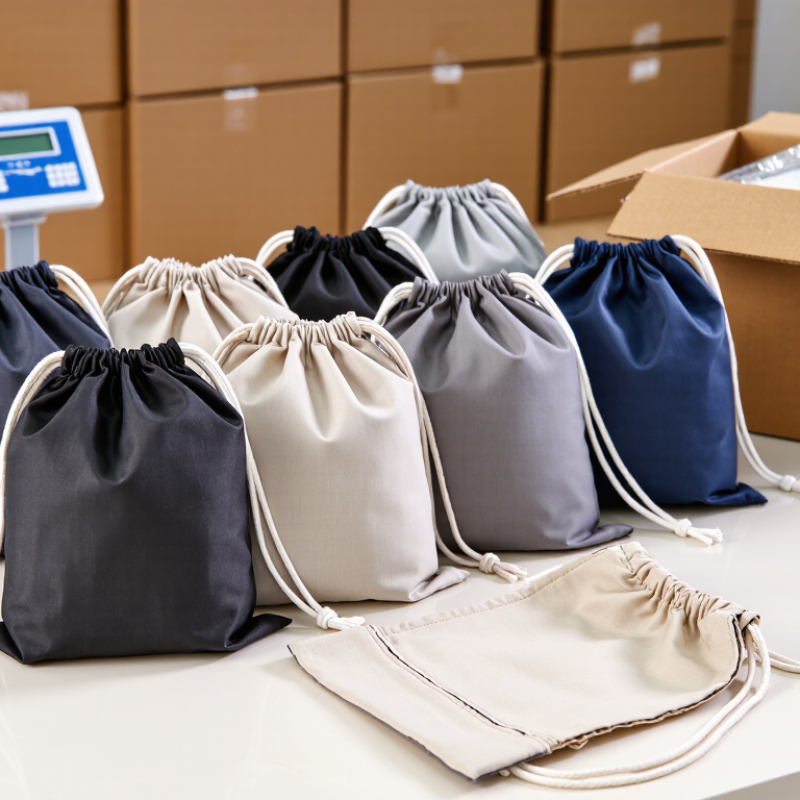
Before contacting a Chinese supplier, define the bag as a measurable product, not just a promotional idea. Specify finished dimensions, fabric type, fabric weight, cord material, closure style, stitching, and maximum load. A 35 × 45 cm cotton bag feels different from a lightweight polyester version. State whether the logo should be screen printed, heat transferred, embroidered, or woven.
Logo requirements need equal precision. Provide artwork in vector format, preferred colors, print size, print position, and acceptable color variation. Mention Pantone references when color consistency matters. Ask for a pre-production sample and inspect the logo edges, cord tension, seam strength, and odor. Small details become expensive after mass production.
Market data supports careful material planning. Grand View Research valued the global reusable bags market at approximately USD 9.13 billion in 2022 and projected a 7.2% CAGR from 2023 to 2030. This growth increases supplier choices, but it does not guarantee quality. The Global Market Insights packaging report also identifies rising demand for reusable and sustainable packaging solutions.
Treat those trends cautiously. “Eco-friendly” is too vague for a purchase order.
Define quantity, target price, shipping destination, packaging method, inspection standard, and delivery window. Request fabric composition and test documentation where relevant.
A realistic specification may include 180 GSM cotton, reinforced stress points, a 30 cm logo width, and individual recycled-paper packaging. I would also record acceptable defects.
My own mistake was focusing on logo appearance while ignoring cord comfort. The bag looked right, but users avoided carrying it.精准计划
Reliable Chinese bag manufacturers are easier to find when you evaluate evidence, not attractive catalog photos. Search through established B2B platforms, trade fairs, and industry directories. Check the factory’s business license, export history, production capacity, and workshop address. A trading company may still be useful, but ask who controls production.
Request a custom sample before discussing large quantities. Examine the drawstring’s strength, seam spacing, fabric weight, printing clarity, and color consistency. Measure the finished bag against your approved specification. Ask for material details, testing records, packaging methods, and quality-control procedures. For children’s products or sensitive markets, confirm applicable safety documentation with an independent testing laboratory. Small details matter.
A video tour can reveal cutting tables, sewing lines, and unfinished stock. However, it is not a full audit. I once trusted a detailed factory presentation and overlooked weak stitching near the cord channel. That mistake changed my inspection checklist. Use a written specification sheet, a signed sample, and pre-shipment inspection. Clarify minimum order quantity, lead time, payment stages, carton dimensions, and delivery terms. Keep communication in writing. A reliable manufacturer should explain limitations instead of promising everything. Some suppliers may quote quickly but avoid precise answers. Treat that hesitation seriously. Begin with a manageable trial order, then review defect rates, response speed, and corrective action before scaling production in 2026.
| Evaluation Dimension | Recommended Requirement | Practical 2026 Benchmark | Evidence to Request | Suggested Weight |
|---|---|---|---|---|
| Product Specification | Define finished size, fabric, cord type, logo position, stitching method, packaging, and allowable tolerances before requesting quotations. | Use a signed specification sheet and an approved pre-production sample. Specify dimensional tolerance, commonly ±5 mm or another mutually agreed limit. | Technical drawing, bill of materials, sample photos, measurement report, and signed approval record. | 15% |
| Fabric and Material | Select cotton, polyester, recycled polyester, non-woven polypropylene, or another material according to strength, appearance, sustainability, and cost requirements. | Require the actual fabric weight or denier to be stated. For example, 210D polyester is a specification, not a guarantee of final bag quality. | Material composition declaration, fabric-weight report, color reference, and pre-production sample. | 10% |
| Logo Printing | Match the printing process to the artwork, order quantity, fabric, color count, and required durability. | Screen printing is commonly suitable for simple graphics and larger runs; digital or transfer printing may be more suitable for detailed or multicolor artwork. Confirm wash and abrasion resistance where relevant. | Artwork proof, color approval, print-position tolerance, ink specification, and sample with the final logo. | 12% |
| Cord and Construction | Check cord diameter, cord material, eyelet or channel construction, seam type, reinforcement, and load-bearing performance. | Require consistent cord length and secure bartacks or reinforced seams at stress points. Set a load test requirement based on the intended use. | Construction sample, seam-strength test, cord-pull test, and inspection photos of stress points. | 10% |
| Factory Capability | Confirm that the supplier can control fabric sourcing, cutting, sewing, printing, packing, and final inspection. | Prefer a supplier that can show relevant drawstring-bag production experience and a documented process from incoming material inspection to shipment release. | Factory audit report, production-flow chart, equipment list, quality-control procedure, and recent product samples without confidential customer information. | 15% |
| Quality Management | Use measurable inspection criteria rather than relying only on product photographs or verbal promises. | Define critical, major, and minor defects. AQL 2.5 is commonly used as a general major-defect sampling reference, but the buyer should approve the inspection plan contractually. | Inspection checklist, sampling plan, corrective-action records, and pre-shipment inspection report. | 12% |
| Compliance and Testing | Match testing and documentation to the destination market, product claims, and intended use. | For textile products, discuss restricted substances, colorfastness, and chemical requirements such as REACH where applicable. Do not treat a certificate as transferable to every product unless its scope matches. | Current test reports, certificate scope, material declarations, and laboratory identification. Verify report authenticity and product relevance. | 10% |
| MOQ and Sampling | Separate sample charges, sampling time, production MOQ, color MOQ, and logo or artwork setup charges. | Custom orders often require several hundred to several thousand pieces depending on material, color, printing method, and factory setup. Treat any quoted MOQ as product-specific. | Written quotation showing MOQ by color and size, sample invoice, sample lead time, and mass-production lead time. | 8% |
| Pricing and Trade Terms | Compare quotations using the same specifications, packaging, payment terms, inspection terms, and delivery basis. | Request prices under a clearly stated Incoterms rule, such as EXW, FOB, or CIF. Confirm whether tooling, sampling, artwork, export packing, freight, and taxes are included. | Formal quotation, pro forma invoice, payment schedule, Incoterms version, and complete cost breakdown. | 8% |
| Lead Time and Delivery | Set separate deadlines for artwork approval, sampling, material preparation, production, inspection, and shipment. | A realistic schedule should include sample approval and buffer time for rework. The final delivery date depends on order quantity, customization complexity, season, and transport method. | Production schedule, shipping plan, carton specifications, packing list, and written delay-handling terms. | 5% |
| Communication and Risk Control | Assess response quality, transparency, contract discipline, and willingness to document changes. | Use a written purchase agreement covering specifications, tolerances, inspection rights, defect remedies, intellectual-property ownership, payment milestones, and dispute procedures. | Business registration details, signed contract, bank-account consistency, change-order records, and buyer-approved communication history. | 5% |
| Total Suggested Evaluation Weight | 100% | |||
When buying custom logo drawstring bags from China in 2026, compare materials before comparing quotes. Polyester is lightweight, water-resistant, and usually cost-effective for sports or event bags. Cotton feels more natural and supports a premium appearance, but it can shrink unless pre-treated. Recycled polyester may strengthen your sustainability message, yet suppliers should provide credible material documentation. Nonwoven fabric is inexpensive, though it may feel less durable. Request a physical sample. Photos often hide thin fabric and weak cords.
Printing affects both appearance and price. Screen printing works well for simple logos with solid colors. Heat transfer suits detailed artwork and small quantities, but printed areas may crack after repeated washing. Sublimation creates vivid designs on suitable polyester fabric, while embroidery looks refined but adds weight and production time. Ask for a pre-production sample, color reference, bag dimensions, cord thickness, and carton details. Small mistakes become expensive at scale.
Minimum orders vary by factory, material, and printing method. A basic order may start around 300 to 1,000 pieces, while custom fabric colors can require more. Unit prices often decrease sharply with larger quantities, but tooling, sampling, packaging, and shipping can change the final cost. Real costs matter. Compare landed prices, not only factory prices. I would also check sewing samples and inspection records before paying the balance. One weakness in this process is that supplier claims are not always equally verifiable, so independent inspection remains worth considering.
Request a pre-production sample before approving bulk production. Check fabric weight, bag dimensions, cord strength, stitching density, and logo alignment. Photograph each detail beside a ruler.
A perfect sample still proves little if production controls are weak. Ask for a written inspection plan using ISO 2859-1 sampling procedures.
The 2024 Smithers report forecasts the global flexible packaging market will exceed 300 billion US dollars by 2028. That growth increases material choices, but also increases quality variation. Request test records for colorfastness, abrasion, seam strength, and odor. Keep one approved sample as the sealed production reference.
Packaging needs equal attention. Confirm the number of bags per inner pack and carton, carton dimensions, gross weight, moisture protection, and pallet requirements.
The World Bank’s 2023 Logistics Performance Index gave China a logistics score of 3.7 out of 5. Strong logistics help, but they cannot fix weak carton protection.
Ask for carton drop-test evidence. Small savings can create large damage.
Write shipping terms clearly under ICC Incoterms 2020. State whether the quotation uses EXW, FOB, CIF, or DDP, and identify who handles export documents, freight, insurance, duties, and final delivery.
Request a shipping schedule with a realistic buffer. I would also confirm logo artwork approval, barcode labels, and carton markings before payment.
Mistakes happen. Build inspection time into the plan.
Buying custom logo drawstring bags from China in 2026 requires more than comparing unit prices. Send an approved artwork file, material specification, size chart, cord details, packing method, and delivery deadline. Confirm the purchase order in writing. Include tolerances for logo position, stitching, color, and dimensions. A clear pre-production sample prevents expensive misunderstandings.
Production control should include dated photos, material checks, and a mid-production update. Use ISO 2859-1 sampling principles for the final inspection, while defining acceptable quality limits before manufacturing starts. Check random cartons, not only the best-looking pieces. Inspect print adhesion, loose threads, cord strength, stains, odor, measurements, and carton labels. Some defects are obvious. Others appear after repeated handling. This is where many buyers remain too optimistic.
Delivery planning needs realistic buffer time. UNCTAD’s Review of Maritime Transport 2024 states that more than 80% of global merchandise trade by volume moves by sea. Therefore, port congestion, vessel changes, and customs delays can affect the schedule. The World Bank’s Logistics Performance Index 2023 also shows that international logistics performance differs significantly between markets. Choose the shipping term carefully, confirm export documents, and request carton dimensions before booking freight. Digital photos help, but they do not replace physical inspection. A perfect production plan rarely stays perfect. Leave room for correction, not excuses.