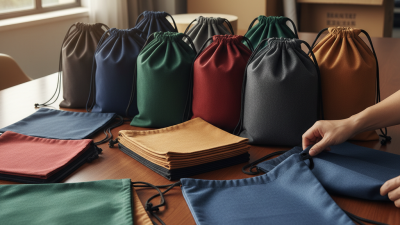

Finding dependable Logo Drawstring Bags China suppliers in 2026 requires more than comparing online prices. Buyers must examine production ability, material quality, printing accuracy, communication, and delivery consistency. A polished product page proves very little.
Chen Rui, a China-based packaging sourcing specialist, offers a useful warning: “A reliable supplier should make quality visible before asking for a large order.” This means requesting current factory photos, material specifications, stitching details, and recent production samples. Look closely at the cord ends, seam strength, fabric weight, and logo alignment. Small defects often reveal larger process problems.
The best Logo Drawstring Bags China suppliers usually provide clear quotations. Their pricing should identify fabric, printing method, packaging, sampling, and shipping separately. Ask whether the factory handles screen printing, heat transfer, embroidery, or digital printing in-house. Confirm minimum order quantities and realistic production schedules. A supplier that promises everything instantly may deserve more questions.
Factory audits can improve confidence, but they are not perfect. Certificates may also require verification. Request company registration details, export experience, inspection procedures, and references from comparable buyers. Video calls can reveal active equipment, organized storage, and actual staff presence. Still, one short call cannot replace sample testing.
Material choices matter. Recycled polyester, cotton, and non-woven fabric suit different budgets and brand positions. Test colorfastness and drawstring durability before approving bulk production. Keep written records of every specification. Supplier selection is not glamorous work. It is careful, sometimes repetitive judgment. A cheaper quote may become expensive after rework, delays, or rejected bags.
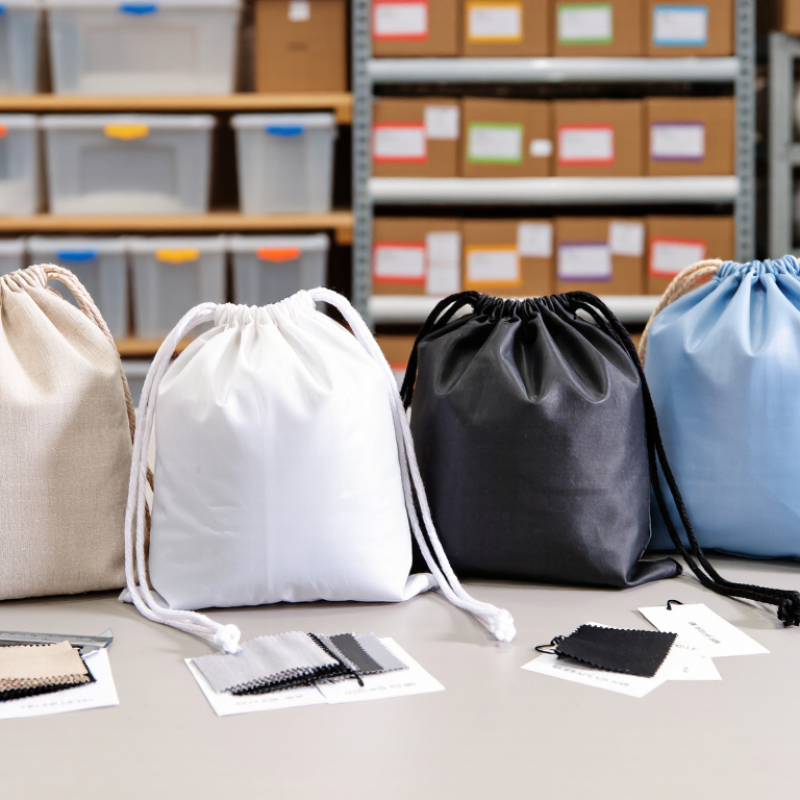
Before contacting China suppliers, write a clear product brief. Specify bag dimensions, fabric weight, color, cord type, closure style, and logo method. A 35 × 45 cm polyester bag may suit lightweight event items, while cotton works better for a softer retail feel. Include artwork files, print size, and placement details. Suppliers quote more accurately when specifications are measurable.
Set a realistic budget before comparing prices. Calculate the target unit cost, sample fees, printing charges, packaging, shipping, and possible import expenses. Ask suppliers to separate every cost in their quotation. Low prices can hide thin fabric, weak stitching, or limited color accuracy. Request a physical sample before approving bulk production. I have seen attractive digital proofs fail during sampling. That mistake is avoidable, but not always.
Tips: Start with a small trial order. Confirm the minimum order quantity, production timeline, inspection process, and replacement policy in writing. Compare at least three quotations using the same specifications. Check factory experience through sample quality, production photos, and clear communication. Leave a small budget buffer for artwork changes or packaging adjustments. Your first brief may be imperfect. Review it after sampling, then improve the next order.
Material choice affects cost, feel, and reuse. Cotton offers a soft, premium texture, while nonwoven polypropylene is lighter and usually cheaper. Recycled polyester can support a lower-impact specification, but suppliers must verify recycled content. Textile Exchange’s Materials Market Report 2024 recorded 124 million tonnes of global fiber production in 2023. That figure makes material traceability harder, not less important. Ask for fiber composition, weight, test reports, and production samples.
Size should match the product, not only the logo. A 15 × 20 cm pouch suits small accessories, while 30 × 40 cm works better for clothing. Add a gusset for bulky items. Screen printing suits simple logos and larger orders. Heat transfer handles detailed graphics and smaller batches. Sublimation is suitable for polyester surfaces and full-color designs. Digital printing offers flexibility, though color consistency needs checking. Smithers’ sustainable packaging research highlights recycled content and material efficiency as key market priorities. Suppliers should explain their ink type and curing process.
Request a pre-production sample. Always. Compare cord thickness, seam strength, print sharpness, and shrinkage after washing. Custom options include woven labels, inner pockets, reinforced eyelets, and different cord colors. However, every extra feature increases lead time and inspection points. A supplier may promise “eco-friendly” fabric without clear evidence. That is a warning. Require measurable specifications, independent testing where needed, and written approval before mass production.
Finding reliable China drawstring bag suppliers begins with a shortlist, not a search result. Grand View Research valued the global reusable bags market at USD 9.16 billion in 2022. It projects 5.8% annual growth through 2030. This demand attracts capable factories and trading companies with limited production control. Both can quote well.
Request the supplier’s registered company details, factory address, production photos, and export experience. Then compare at least three physical samples. Check fabric weight, stitching density, cord strength, print alignment, and seam finishing. Ask for the material composition and independent test reports. A video call can reveal cutting tables, sewing lines, and packed cartons. It is not a full audit. Still, it exposes obvious inconsistencies.
Use a scoring sheet for quality, communication, capacity, minimum order quantity, lead time, and payment terms. Smithers’ sustainable packaging research highlights recyclability, recycled content, and traceability as important packaging priorities. Ask whether production records can support these claims.
I once trusted a polished sample too quickly. The bulk order showed weaker stitching. That mistake still influences my supplier checks. Leave room for doubt. Suppliers should explain defects, not hide them. A small pilot order remains useful, even when the factory appears experienced.
How to Find Logo Drawstring Bags China Suppliers 2026?
Finding a reliable drawstring bag supplier requires more than comparing online prices. Request production samples with your exact fabric, dimensions, cord, and logo artwork. Check seam strength, stitch density, cord tips, print clarity, and color consistency. A practical test is filling each sample with its expected load and pulling the cords repeatedly. Small defects often appear after several cycles. Ask for the sample specification in writing. Otherwise, bulk production may quietly change materials.
Verify certifications through the issuing organization, not only through emailed files. Check the certificate holder, factory address, validity period, testing scope, and applicable product materials. A certificate for fabric may not cover printing or finished bags. Request recent laboratory reports for colorfastness, restricted substances, and physical performance when relevant. Certification alone is not proof of daily quality control. Factory inspection records, corrective-action reports, and traceable batch samples provide stronger evidence.
Compare complete pricing, including sampling, printing plates, packaging, inspection, freight, taxes, and payment terms. The lowest quotation may exclude important costs. Ask for a detailed capacity statement showing machines, workers, shifts, monthly output, and current production schedules. A supplier claiming unlimited capacity needs evidence. Review reference orders, visit the workshop, or arrange a live video inspection. Forecasts can be wrong, including mine, so confirm lead times again before placing a large order. Keep approved samples and signed specifications beside the purchase agreement.
| Evaluation Area | Key Data Dimension | Recommended Verification Standard | Practical Benchmark or Requirement | Evidence to Request Before Ordering |
|---|---|---|---|---|
| Product Quality | Fabric composition and weight | Confirm whether the bag is made from cotton, recycled polyester, polyester, non-woven polypropylene, or another specified material. The stated fabric weight should match the approved sample. | Require a tolerance of no more than approximately ±5% for fabric weight unless a different tolerance is agreed in writing. | Material specification sheet, fabric test report, production sample, and pre-production approval record. |
| Product Quality | Logo printing durability | Check color consistency, print position, edge sharpness, adhesion, and resistance to rubbing and washing where applicable. | For printed logos, request a dry-rub and wet-rub assessment. The final result should comply with the buyer’s agreed quality limit and artwork proof. | Approved artwork, color reference, strike-off sample, inspection photos, and test results from an independent laboratory when required. |
| Product Quality | Seam, cord, and hardware strength | Inspect seam straightness, bartacks, drawstring attachment, eyelets, cord ends, and reinforcement at stress points. | Use a written workmanship standard covering loose threads, skipped stitches, open seams, uneven hems, and damaged hardware. Apply an agreed AQL inspection plan for mass production. | Golden sample, sewing specification, workmanship photos, and third-party pre-shipment inspection report. |
| Certifications | Quality management system | Verify an active ISO 9001 certificate issued to the actual manufacturing legal entity and confirm the certificate scope covers the relevant textile or bag production activity. | Certificate should show the legal entity, valid dates, certification scope, certificate number, and accredited certification body. | Complete certificate copy, certification-body verification link, business license, and factory address matching the audited location. |
| Certifications | Restricted substances and textile safety | For products intended for sensitive-use markets, request testing against the buyer’s applicable chemical and consumer-product requirements. OEKO-TEX Standard 100 is a product-safety label, not a general factory-quality certificate. | The certificate must cover the exact product class, components, colorways, and certificate validity period. Do not accept a certificate for a different product without confirmation. | Product certificate, test report, component list, color list, and laboratory verification record. |
| Certifications | Recycled-material claims | If recycled polyester or recycled cotton is advertised, verify the applicable chain-of-custody documentation, such as GRS or another recognized standard requested by the buyer. | The transaction scope should cover the supplied material and the relevant processing stages. A factory environmental claim alone is not proof of recycled content. | Valid scope certificate, transaction certificate where applicable, raw-material invoices, and material composition test. |
| Social and Ethical Compliance | Worker and workplace practices | Review an independent social audit or an equivalent buyer-approved assessment covering working hours, wages, child labor, forced labor, health and safety, and grievance procedures. | Audit status, corrective-action records, and audit date should be current according to the buyer’s procurement policy. BSCI is an assessment platform rather than a product-quality certification. | Recent audit report, corrective-action plan, factory registration, production-floor photos, and worker-safety records. |
| Pricing | Unit-price structure | Compare quotations on the same basis: bag dimensions, material weight, logo method, number of print colors, packaging, carton quantity, Incoterm, and payment terms. | A quotation is not comparable unless it clearly separates product price, printing or setup charges, packaging, tooling, freight, taxes, and inspection costs. | Formal quotation, cost breakdown, sample charge, mold or plate charge, packaging specification, and Incoterm such as FOB or EXW. |
| Pricing | Economies of scale | Request at least three quantity tiers and ask whether the price changes because of material purchasing, printing setup, packaging, or labor efficiency. | Use quantity tiers such as 500, 1,000, 3,000, 5,000, and 10,000 pieces for comparison; the supplier should explain the reason for each price change. | Tiered quotation, minimum-order quantity, price-validity period, payment schedule, and written explanation of one-time charges. |
| Production Capacity | Monthly output and available capacity | Separate total factory capacity from capacity available for the buyer’s order. Confirm whether cutting, sewing, printing, packing, and quality control are performed in-house or subcontracted. | Capacity figures should be supported by recent production records, machine counts, staffing data, and a realistic production calendar rather than a verbal claim alone. | Monthly production report, machine list, staffing summary, production schedule, subcontractor disclosure, and factory video or audit report. |
| Production Capacity | Lead time | Obtain separate timelines for sample development, artwork approval, material procurement, bulk production, inspection, and dispatch. | For a standard repeat design, request a written estimate with milestone dates. Custom fabric, special printing, imported accessories, and peak-season orders require additional time. | Production timeline, critical-path schedule, raw-material availability confirmation, and late-delivery remedy in the purchase order. |
| Production Capacity | Order flexibility and replenishment | Check whether the supplier can support repeat orders, mixed colors, multiple logo versions, and partial shipments without changing the agreed specification. | Require written rules for minimum quantities per color or artwork, replacement of defective goods, and retention of approved samples. | Purchase-order terms, repeat-order policy, color and artwork matrix, sample-retention record, and corrective-action procedure. |
| Factory Verification | Legal identity and facility match | Confirm that the contracting entity, bank-account holder, export documentation, business license, and physical factory address are consistent. | The payment beneficiary should be verified before deposit. Any change of beneficiary or factory location should trigger additional due diligence. | Business license, export registration where applicable, bank-account confirmation, factory address, and signed company-stamp information. |
| Final Inspection | Defect acceptance and shipment release | Use an agreed inspection specification covering dimensions, material, logo position, color, workmanship, quantity, packaging, and carton markings. | Define the inspection level and AQL limits in the purchase order before production. Shipment should be released only after the inspection result is accepted. | Inspection checklist, approved sample, measurement sheet, defect classification, inspection report, and corrective-action record. |
| Commercial Risk | Payment protection | Use staged payments linked to sample approval, production completion, inspection, and shipping documents where commercially appropriate. | Avoid paying the full balance before quality verification unless the risk has been assessed and contract protections are in place. | Signed sales contract, proforma invoice, payment schedule, refund or replacement terms, and dispute-resolution clause. |
Note: Pricing, lead time, minimum order quantity, and capacity vary by material, size, printing method, order quantity, season, and Incoterm. Treat supplier quotations as valid only after the specifications and verification documents are confirmed in writing.
The reusable bag market is expanding steadily. Grand View Research valued it at about USD 9.6 billion in 2023, with growth expected through 2030. This signals opportunity, but not every supplier deserves your order. Request three samples from each factory. Check fabric weight, cord strength, stitching, logo alignment, color accuracy, and odor. Place the bag under normal use. Pull the cord repeatedly. Small faults become expensive at scale.
Ask for a written quotation covering MOQ, sample fees, production time, payment stages, packaging, and Incoterms. Confirm whether the logo uses screen printing, heat transfer, embroidery, or another process. Each method changes durability and cost. Mordor Intelligence also identifies material choice and reusability as important factors in the global reusable bag market. Request a pre-production sample before paying the final balance. Keep one approved sample in your office. It becomes the clearest quality reference.
Manage the 2026 order with dated checkpoints. Confirm artwork, quantity, fabric color, carton markings, and inspection standards before production. A third-party inspection can verify dimensions and random carton counts. Leave schedule space for corrections. Do not trust a promised shipping date alone. Ask for weekly production photos and updated loading information. My practical lesson is simple: a beautiful sample proves little if the factory cannot repeat it. I once treated a small logo shift as harmless. It was not.