

How to Source Customized Drawstring Bags Wholesale
Sourcing Customized Drawstring Bags wholesale is more than comparing prices on a supplier spreadsheet. It requires a clear product brief, careful material checks, and practical communication. The bag must match its purpose. A gym pouch needs sturdy cords and breathable fabric. A promotional bag may need sharp printing and consistent color. Small details often decide whether a bulk order succeeds or becomes expensive inventory.
Packaging procurement specialist Lena Chen puts it plainly: “A good bag starts with a clear brief, not a low price.” Her advice reflects real sourcing experience. Before requesting quotations, buyers should define dimensions, fabric weight, closure style, logo method, packaging, and expected order volume. Ask for physical samples. Check stitching around the cord channel. Rub the printed area gently. Does the ink crack, fade, or transfer? These simple tests reveal more than polished product photos.
Supplier verification also matters. Review factory capabilities, quality procedures, sample approval practices, and production timelines. Request written specifications and confirm every detail before payment. A small mistake in logo placement can affect thousands of bags. It is easy to focus on unit cost. That focus can be misleading. Freight, customs handling, rejected units, and delayed delivery may change the final price. Not every attractive quotation represents good value. Buyers should also admit what they do not know. Fabric performance, color consistency, and packaging standards may require professional guidance. A reliable wholesale partner explains limitations clearly and welcomes reasonable inspection. That is where Customized Drawstring Bags become a dependable business product, rather than just another bulk purchase.
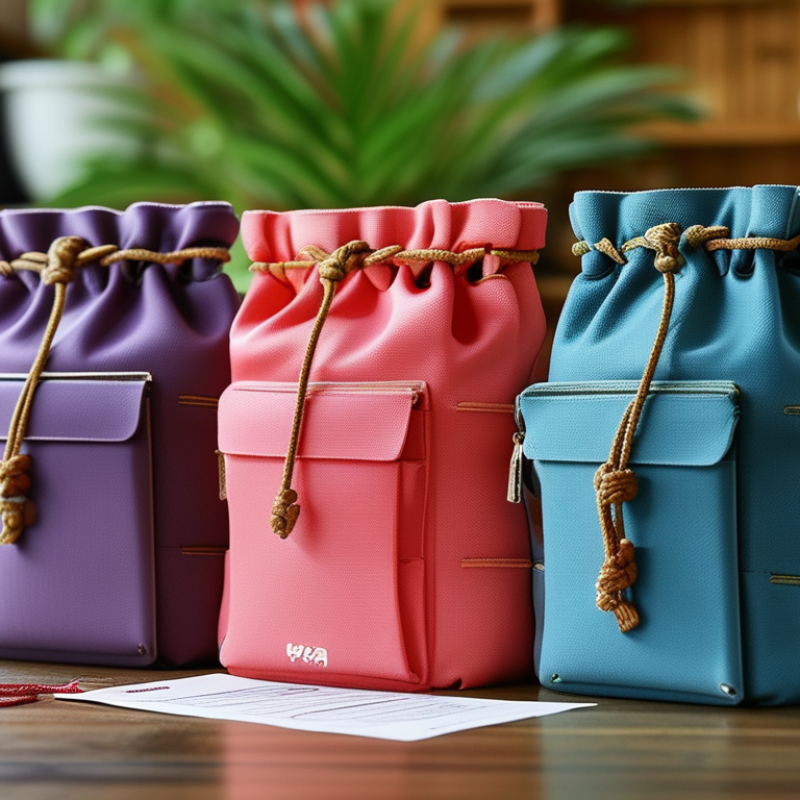
Define Bag Specifications: Size, 80–150 GSM Fabric, Cord, Print, and Packaging
When sourcing customized drawstring bags wholesale, begin with a clear specification sheet. Define the finished size in centimeters, including width, height, and bottom shape. Measure the bag flat and state whether dimensions include the casing. Small wording differences can affect an entire production run.
For most promotional or retail projects, 80–150 GSM fabric provides a useful weight range. An 80 GSM bag feels light and folds easily, but it may show through under strong printing. A 150 GSM fabric offers better structure and durability, though shipping volume may increase. Confirm the fabric type, color, weave, and acceptable shrinkage before sampling. I have learned that “natural fabric color” is not always consistent between batches.
Specify the cord diameter, material, length, and knot method. Thin cords can look neat but may feel uncomfortable when carrying heavier items. For printing, provide artwork files, ink colors, print positions, and the maximum printable area. Request a physical sample before approving bulk production. Packaging also needs detail, including folding method, inner quantities, carton dimensions, labels, and moisture protection. A reliable supplier should provide measurements, pre-production photos, and inspection records. Still, samples can hide production variation. Check random bags from different cartons, not only the first sample.
| Specification | Recommended Options | Typical Wholesale Requirement | Suitable Application | Sourcing Notes |
|---|---|---|---|---|
| Bag Size | 20 × 25 cm | Compact format for lightweight items | Jewelry, cosmetics, small gifts, event giveaways | Confirm finished dimensions after sewing. Allow approximately 2–3 cm of usable space for the top channel and drawstring closure. |
| Bag Size | 25 × 30 cm | General-purpose medium size | Apparel accessories, stationery, footwear accessories, promotional kits | A practical standard size for wholesale orders because it balances material usage, packing efficiency, and product capacity. |
| Bag Size | 30 × 40 cm | Larger format for bulkier contents | Shoes, towels, soft toys, gift sets, travel accessories | Request a sample with the intended contents inside to verify opening width, depth, and load-bearing performance. |
| Fabric Weight | 80 GSM non-woven or lightweight woven fabric | Lightweight construction with lower material consumption | Single-use promotions, trade-show items, light packaging | Best for low-load applications. Ask for seam and handle testing if the bag will carry products heavier than approximately 1 kg. |
| Fabric Weight | 100–120 GSM cotton or polyester fabric | Balanced option for durability and cost | Retail packaging, event merchandise, reusable gift bags | This range is commonly selected for reusable drawstring bags. Confirm fabric composition, weave density, shrinkage, and colorfastness. |
| Fabric Weight | 140–150 GSM cotton or recycled polyester fabric | More structured and durable construction | Premium merchandise, shoes, books, heavier gift sets | Heavier fabric may increase freight volume and unit cost. Confirm whether the production line can maintain consistent GSM across the order. |
| Cord Material | Polyester, cotton, or recycled polyester cord | Usually selected according to fabric type and target price | All common drawstring bag formats | Specify cord diameter, color, softness, and end finishing. A cord diameter of about 3–5 mm is suitable for many medium-sized bags. |
| Cord Construction | Single cord, double cord, or round braided cord | Double-cord designs provide balanced opening and closing | Retail bags, promotional bags, and reusable packaging | Double-cord construction is generally preferred for bags opened from both sides. Request pull-strength testing for heavier contents. |
| Print Method | Screen printing, heat transfer, digital printing, or sublimation | Choice depends on artwork, fabric, quantity, and color count | Logos, text, illustrations, campaign artwork | Screen printing is efficient for simple artwork and larger runs. Digital or transfer printing is more flexible for detailed or multi-color designs. |
| Print Coverage | Front-only, front-and-back, or all-over print | Front-only generally offers the lowest decoration cost | Brand messaging, seasonal graphics, promotional campaigns | Define the print area in centimeters and provide vector artwork where possible. Confirm color references and the acceptable print-registration tolerance. |
| Print Quality | Color consistency, adhesion, wash resistance, and edge sharpness | Approve a pre-production sample before bulk manufacturing | Long-term reusable bags and customer-facing packaging | Request a physical strike-off or digital proof. Printed results can vary with fabric color, surface texture, ink type, and curing conditions. |
| Seams and Closure | Double-stitched side seams with reinforced drawstring channel | Recommended for reusable bags and moderate loads | Retail packaging, travel storage, merchandise bags | Specify stitch density, seam allowance, channel width, and reinforcement requirements. Inspect loose threads and uneven stitching during quality control. |
| Inner Packaging | Bulk packing in recycled polyethylene bags or paper cartons | Pack quantities commonly arranged in uniform inner bundles | Warehouse handling and inventory management | Confirm the quantity per inner pack, carton dimensions, gross weight, carton markings, and whether individual polybags are required. |
| Outer Carton | Export carton with product description, quantity, and weight marks | Cartons should be stackable and suitable for the selected transport method | Sea freight, air freight, courier, and consolidated shipments | Request carton dimensions and estimated carton count before approving the order so freight costs and warehouse capacity can be calculated accurately. |
| Order Quantity | Sample run, pilot order, or full wholesale production | Minimum order quantities vary by fabric, color, printing method, and size | Market testing through to regular replenishment | Ask for separate pricing at several quantity tiers. Confirm whether setup fees, sampling charges, packaging, and printing plates are included. |
| Quality Inspection | Size, GSM, color, print, stitching, cord, quantity, and packaging checks | Inspection completed before shipment release | All customized wholesale orders | Use an approved specification sheet and sample as the inspection reference. Record acceptable tolerances for dimensions, color variation, and printing position. |
Related Posts
-
What is Customized Drawstring Bags and Why Choose Them?
-
Top 10 Logo Drawstring Bags China for Your Promotional Needs?
-
What is a Customized Drawstring Bag and How to Choose the Best One
-
How to Choose the Best Logo Drawstring Bags in China for Your Brand?
-
High Quality Logo Drawstring Bags from China for Your Business?
-
Top Quality Logo Drawstring Bags from China for Your Business?