China Top 10 Promotional Knitted Gloves Manufacturers
China’s promotional knitted gloves market combines practical warmth with visible brand communication. This guide introduces ten Chinese manufacturers serving customized Promotional Knitted Gloves projects for companies, events, retailers, and institutional campaigns. The list is a research starting point, not an unquestionable verdict.
Real buying decisions involve more than a polished catalog. A capable supplier should explain yarn composition, knitting density, cuff recovery, logo methods, sizing, and packaging. Small details matter. A loose cuff can reduce comfort. Uneven embroidery can weaken a campaign’s appearance. Sample approval, production lead time, minimum order quantity, and quality inspection records also deserve close attention. Where available, this overview considers factory experience, export capability, customization depth, communication quality, and evidence from product documentation or customer-facing work.
Transparency is essential. Manufacturer claims should be checked through samples, business credentials, audit reports, and clear commercial terms. Certifications can support confidence, but they should match the actual product and destination requirements. No supplier is perfect. Some may offer excellent pricing but limited design support; others may provide strong craftsmanship with slower communication. That trade-off is easy to overlook. Readers should compare materials, timelines, warranty responses, and total landed cost before choosing a partner. The following profiles aim to make that comparison more practical, while acknowledging that market information changes and independent verification remains necessary.
China’s Promotional Knitted Glove Industry: Materials, Gauge, GSM, and Key Uses
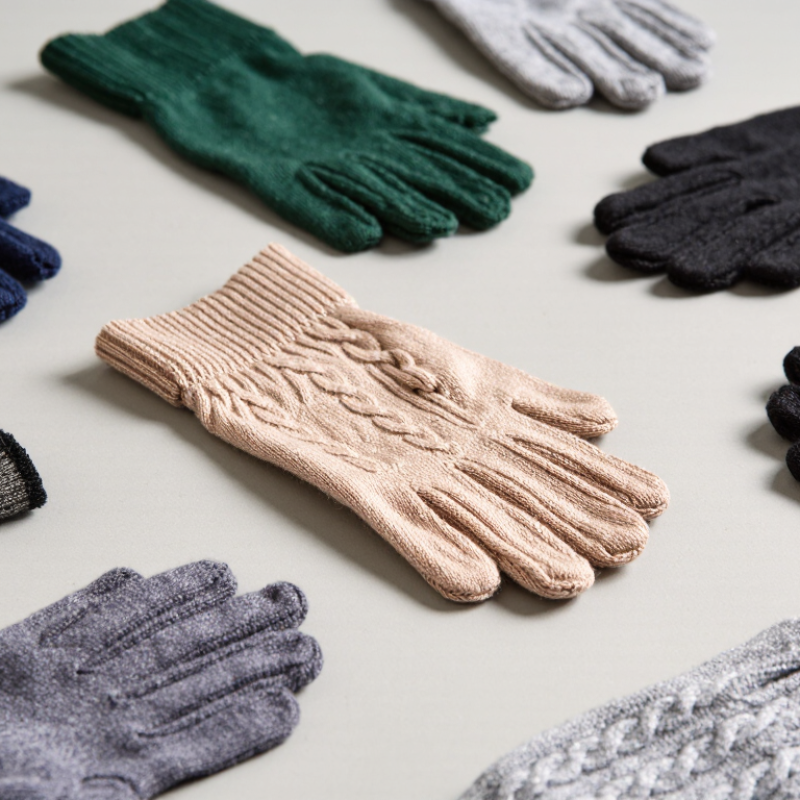
China’s promotional knitted glove sector combines textile engineering with short-run customization. The Textile Exchange Materials Market Report 2024 recorded 124 million tonnes of global fiber production in 2023. That figure explains the growing interest in recycled polyester and certified recycled acrylic. Acrylic remains popular because it is warm, colorfast, and economical. Wool adds natural insulation, but it raises cost and may irritate sensitive skin. Nylon improves abrasion resistance, while elastane supports a closer fit.
Gauge controls knitting density. A 7-gauge glove uses thicker yarn and feels visibly chunky. A 10-gauge structure balances warmth, flexibility, and production efficiency. A 13-gauge glove looks finer and suits lightweight event wear. Finer does not always mean warmer. Yarn blend and stitch structure matter more than buyers sometimes expect. Typical promotional styles range from 100 to 180 GSM for mild weather, and 180 to 260 GSM for colder outdoor campaigns. Suppliers should provide measured GSM, not only a catalog estimate.
Use also affects the specification. Thin 13-gauge gloves suit festivals, retail launches, and commuter giveaways. Heavier 7- or 10-gauge versions fit winter races, construction promotions, and outdoor staff uniforms. Conductive yarn can support touchscreen use, but finger placement needs testing. PPAI’s 2024 industry sales report valued the North American promotional products market at about 26.6 billion dollars in 2023, showing strong demand for practical merchandise. Still, sample approval remains essential. Size tolerance, cuff recovery, color migration, and washing tests can expose weaknesses that attractive product photos hide.
How to Evaluate China’s Top 10 Promotional Glove Manufacturers by 5 Criteria
China Top 10 Promotional Knitted Gloves Manufacturers
To evaluate China’s top ten promotional knitted glove manufacturers, use a documented five-criterion scorecard. Do not rely on catalogue photographs. Grand View Research estimates the global promotional products market reached about US$85 billion in 2023. Buyers now expect useful, durable merchandise, not disposable advertising. A glove should carry a logo and survive repeated winter wear.
Score material performance at 25%, customization at 20%, quality and compliance at 20%, production capacity at 20%, and commercial transparency at 15%. Textile Exchange’s 2024 Materials Market Report states that recycled polyester represented roughly 14% of polyester production. Ask for fiber composition, pilling results, colorfastness records, and recycled-content evidence. Check whether embroidery remains comfortable after washing. Some suppliers provide excellent samples but inconsistent bulk production. That weakness deserves a penalty.
Request a pre-production sample, a written size chart, and a realistic delivery schedule. Compare minimum order quantities, mold or setup fees, packaging details, and payment terms. PPAI’s 2024 sales study valued U.S. promotional-product sales at approximately US$26.6 billion in 2023, indicating strong demand for dependable fulfillment. However, market growth does not prove factory reliability. Review recent audit records, corrective-action reports, and independent test results. A factory visit, when practical, can reveal crowded storage, loose threads, or unclear quality checkpoints. The lowest quotation may be attractive, yet it can hide weaker yarn, slower sampling, or costly rework.
This chart presents a practical five-criteria weighting model for evaluating promotional knitted glove manufacturers in China. The 100-point framework emphasizes product quality and customization while also considering order flexibility, delivery performance, and compliance documentation.
Knitting Technology Compared: 7-, 10-, and 13-Gauge Promotional Gloves
China Top 10 Promotional Knitted Gloves Manufacturers
Knitting Technology Compared: 7-, 10-, and 13-Gauge Promotional Gloves
Gauge means the number of needles used within one inch of knitting. A 7-gauge glove has thicker yarn and wider stitches. It feels warm, sturdy, and suitable for outdoor campaigns or winter workwear. However, its surface may look less refined around small printed details.
A 10-gauge glove offers a practical middle ground. It provides moderate warmth, smoother handling, and enough space for clear promotional decoration. Many buyers choose it for events, warehouse teams, and seasonal gifts. A 13-gauge glove uses finer yarn and creates a lighter, closer fit. It feels more flexible, but it may provide less insulation in cold conditions. Fine knitting can also increase production costs. The decision is not always obvious.
Tips: Request physical samples from several manufacturers. Check stitch consistency, cuff recovery, palm grip, and decoration clarity. Rub the printed area after washing. Ask for the exact yarn composition and gauge record. A factory may describe a glove as “fine knit,” but that phrase lacks useful precision. I would also compare the same design across all three gauges. This exposes color changes, stretching, and hidden sizing issues. Small logos can lose definition on coarse stitches. That detail is easy to miss. Keep the final use in mind, not only the catalog photograph.
Quality Benchmarks: EN 388 Ratings, AQL 2.5, GSM, and Size Accuracy
China Top 10 Promotional Knitted Gloves Manufacturers
When evaluating China’s top ten promotional knitted glove manufacturers, quality begins with measurable evidence. EN 388 ratings should match the glove’s intended use, not merely appear on a product sheet. Check abrasion, cut, tear, and puncture levels through current laboratory reports. Impact protection requires separate verification. A printed rating is not enough.
AQL 2.5 offers a practical inspection benchmark for production batches. It does not mean every glove is flawless. Inspectors should define sampling plans, critical defects, and acceptance limits before shipment. I have seen attractive samples fail because loose threads appeared after washing. That detail matters. Factory records, corrective actions, and repeat inspections reveal more than photographs.
GSM helps compare knitted density and hand feel. Higher GSM may improve warmth, but it can reduce flexibility. Yarn type and knitting structure also influence performance. Size accuracy needs physical measurement, not assumptions. Measure palm width, finger length, cuff opening, and total length against an approved sample. A tolerance of a few millimeters can affect comfort during large promotional campaigns. Some suppliers report average measurements, which can hide inconsistent pieces. Ask for size charts, pre-production samples, and carton-level checks. I would also review shrinkage after washing, because this step is often overlooked. The better decision may not be the cheapest quote.
China Top 10 Promotional Knitted Gloves Manufacturers - Quality Benchmarks: EN 388 Ratings, AQL 2.5, GSM, and Size Accuracy
| Rank |
Anonymous Manufacturer Profile |
Typical Product Construction |
EN 388 Rating
Mechanical Risk |
AQL Inspection
Level / Limit |
Fabric Weight
(GSM) |
Size Accuracy
(± mm) |
Logo Application |
Quality Benchmark |
| 01 |
Anonymous Profile A |
13-gauge polyester knit |
3121X |
General II / 2.5 |
125–135 |
±5 |
Screen print, woven label |
High consistency |
| 02 |
Anonymous Profile B |
15-gauge nylon knit |
2121X |
General II / 2.5 |
105–115 |
±6 |
Heat transfer, embroidery |
Lightweight precision |
| 03 |
Anonymous Profile C |
10-gauge cotton/polyester blend |
3131X |
General II / 2.5 |
165–180 |
±6 |
Jacquard, silicone print |
Durable promotional grade |
| 04 |
Anonymous Profile D |
13-gauge acrylic knit |
2121X |
General II / 2.5 |
135–150 |
±7 |
Embroidery, patch label |
Cold-weather value |
| 05 |
Anonymous Profile E |
15-gauge recycled polyester |
2131X |
General II / 2.5 |
110–120 |
±5 |
Water-based print, label |
Sustainable option |
| 06 |
Anonymous Profile F |
13-gauge nylon/spandex knit |
3131X |
General II / 2.5 |
120–140 |
±5 |
Sublimation, silicone grip |
Best fit retention |
| 07 |
Anonymous Profile G |
10-gauge polyester/cotton knit |
3121X |
General II / 2.5 |
175–195 |
±7 |
Screen print, embroidery |
Heavy-duty comfort |
| 08 |
Anonymous Profile H |
15-gauge polyester knit |
2121X |
General II / 2.5 |
100–115 |
±6 |
Heat transfer, screen print |
Fast promotional cycles |
| 09 |
Anonymous Profile I |
13-gauge cotton/polyester knit |
3131X |
General II / 2.5 |
145–160 |
±6 |
Jacquard, embroidery |
Balanced performance |
| 10 |
Anonymous Profile J |
7-gauge acrylic winter knit |
2121X |
General II / 2.5 |
210–235 |
±8 |
Woven label, embroidery |
Warmth-focused grade |
Technical reference:
EN 388 codes are shown in the order of abrasion, blade cut, tear, puncture, and ISO cut performance where applicable. AQL 2.5 indicates a commonly specified acceptance limit for general production inspection; the applicable sampling plan should be agreed before inspection. GSM and size tolerances are practical product-control benchmarks and should be confirmed against the approved sample and measurement specification.